Resize the map
83 Result(s)
Refine Search
Keyword
Type of facility
Location of the facility
Managed by
Target group (gender)
Target group (age)
Indicated principles
Social entreprise present?
Loading

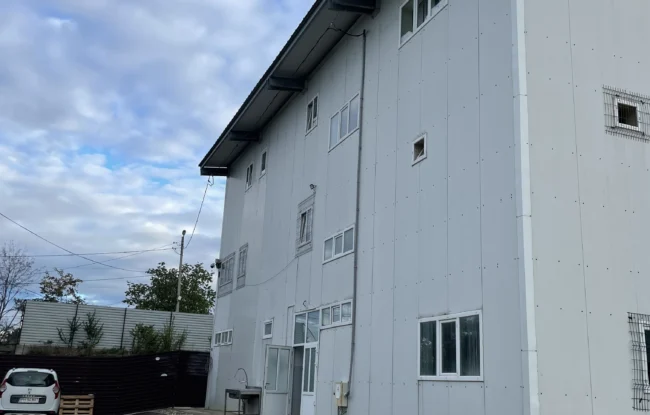
The Ploieşti prison is located in Ploieşti (Romania), it houses 395 people and accommodates male adults after conviction in semi-open and open regimes. In October 2022, the Ploieşti Prison began a new open program, which is located at a different place, called Floreşti. The project is known as “Work point with permanent accommodation for incarcerated persons – Floreşti, Prahova” (“Floreşti facility” from now on). This program is a mix between a prison and a halfway house and cooperates with a private partner who provides accommodation in exchange for work done by residents for the company. …

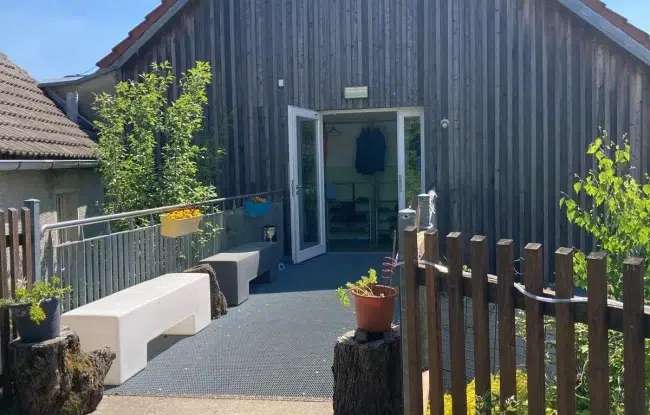
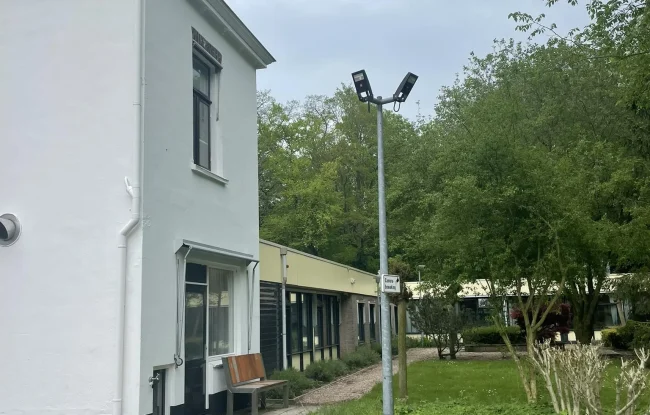
Halbe Treppe is an open detention facility for women located in the Mohorn district of the town of Wilsdruff, in the German state of Saxony. The facility was established in 2022 through a collaboration between the Saxon State Ministry of Justice, Chemnitz Prison, and the NGO Outlaw gGmbH, which is responsible for its daily operations. Halbe Treppe was created to address the lack of suitable settings for open, sentence-based detention for women in Saxony, offering an environment focused on reintegration and autonomy. Its approach centers on pro-social learning within a small group structure that encourages a “positiv…

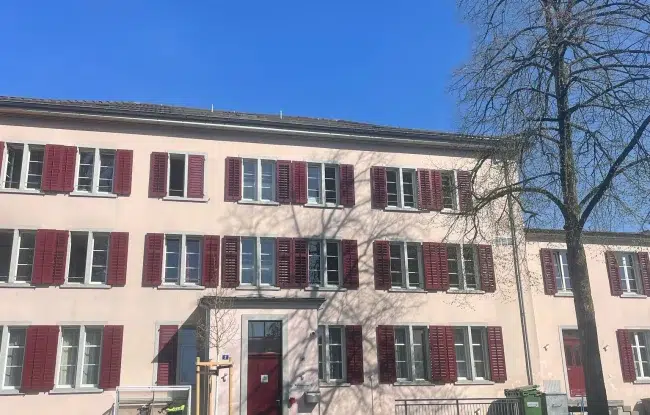
Halbgefangenschaft Winterthur (HG Winterthur) is a semi-detention facility located in the city of Winterthur, in the canton of Zürich. Its mission is to enable residents to maintain their professional, educational, and social environments while serving their sentence. The facility functions according to the semi-detention concept, which allows residents to work, study, or train during the day while spending their nights and leisure time within the institution. …

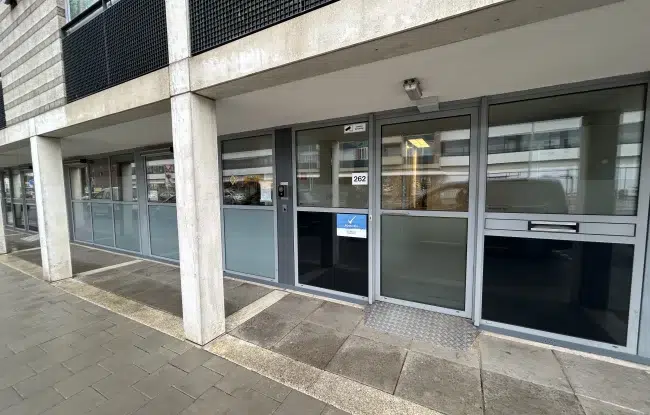
Hostel Boschdijk is located in a residential area, Oud-Woensel, in Eindhoven. This housing facility is known for its unique target group, providing supported living for individuals experiencing long-term addiction and (formerly) homelessness. The hostel follows a policy of tolerance, aiming not to stop substance use, but to allow it to take place in a controlled manner. Residents are permitted to use substances in their own rooms and can receive methadone at a methadone clinic in the neighborhood. Additionally, clean needles and other supplies are provided for safe usage. Hostel Boschdijk offers accommodation to a group that has few alternative housing options, often…

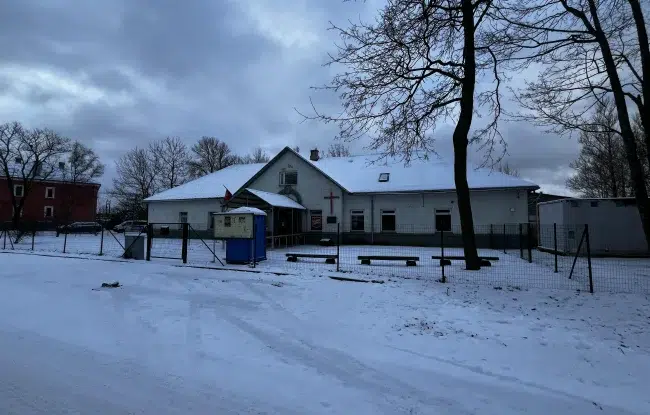
House of Hope is a faith-based residential facility located in Kopli, a district of Tallinn, and is managed by the NGO The Salvation Army. Founded in 2010 by Salvation Army workers, House of Hope initially functioned as a renovated soup kitchen before developing into a secure residential program. Today, it offers an alternative to incarceration or a transitional environment for men experiencing addiction, homelessness, and social exclusion. The facility aims to provide men with the opportunity to enter a structured, abstinence-based program, often as a substitute for a traditional prison sentence. While many residents are referred through partnerships with the court …

House of Recovery Twente (in Dutch: Huis van Herstel) is an open detention facility in Almelo, the Netherlands. The facility was established in 2021 and is currently in a pilot phase that will last until 2026. It operates under the jurisdiction of the Custodial Institutions Agency of The Netherlands. Within the House of Recovery Twente, there is a strong emphasis on cross-domain cooperation with various network partners. The partners are the prison of Almelo, the three probation organizations and the fourteen municipalities of the Twente region. These partners extend beyond traditional law enforcement agencies and include organizations capable of providing care and o…

Huis en Haard 3, located in The Hague, is a protected residential facility that offers adults with psychiatric conditions a safe and supportive living environment. This facility is managed by the Salvation Army. The aim of Huis en Haard 3 is to help residents return to society as independently as possible. This is achieved by offering support in building daily structure and finding suitable daytime activities. With 24-hour support, a stable foundation is created for personal growth and recovery. Thanks to the combination of professional care and a recovery-oriented approach, Huis en Haard 3 not only provides a safe environment but also offers concrete opportunities f…

Intermezzo is a facility located in Eindhoven, the southeast of the Netherlands, and was founded in 2019. The facility is managed by the Doorpakkers Foundation. Doorpakkers is an organisation active in the southeast part of the Netherlands. They have several programs, that focus on forensic protected living, outpatient support and temporary housing assistance. The mission of Doorpakkers is "do what we say and say what we do!". Intermezzo is a form of forensic protected living. It is a residential facility that has fairly strict rules with someone present 24 hours a day. This is in contrast to their other apartments where there is less supervision.

The "Pietro Siciliani" Juvenile Prison (from now on “Bologna IPM”) is located in the centre of Bologna and forms part of the broader Juvenile Justice Centre (CGM) for the Emilia-Romagna region, in North-Italy. The CGM is responsible for implementing judicial orders issued by juvenile courts and collaborates with regional and local authorities on prevention and rehabilitation policies. In addition to the facility, the complex includes a Centre for First Reception (CPA), a Juvenile Social Services Office, and a state-run residential community for minors under precautionary measures, where support is delivered through individualised, interdisciplinary approaches. Situat…

The Institution Publique de Protection de la Jeunesse (IPPJ) de Saint-Servais is a residential facility for girls located near Namur in Wallonia, the French-speaking region of Belgium. It is the only IPPJ in the Wallonia–Brussels Federation exclusively for girls, meaning young women from across the region, including Brussels, may be placed here. Founded nearly a century ago, the facility will celebrate its centenary in 2026. Staff consider the geographical distance from residents’ home environments beneficial, especially for those from urban settings marked by prostitution, substance abuse, or violence. The IPPJ network forms part of Belgium’s public youth protection…

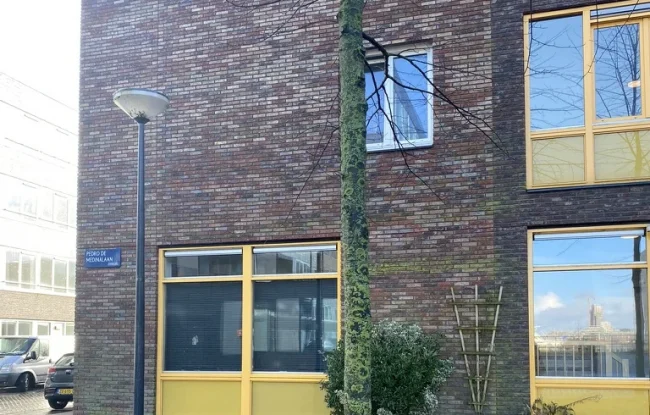
The Small-scale Judicial Youth Facility Amsterdam (from now on “KVJJ Amsterdam”) was established in 2016 and is located in Amsterdam, the capital city of The Netherlands. It is one of the five small-scale youth facilities in The Netherlands. KVJJ Amsterdam is managed by the Custodial Institutions Agency of The Netherlands in collaboration with a Dutch organisation named Levvel. KVJJ’s are based on three principles. First, they want to maintain the positive elements of the young person's life during their stay in the facility. For this reason, young people are placed close to their living environment in order to maintain contact with their family, friends and network. In addition, they want t…

The Small-Scale Judicial Youth Facility The Hague (hereafter referred to as "KVJJ The Hague") is one of the five small-scale judicial youth facilities in the Netherlands. These facilities are low-security and operate under the jurisdiction of the Custodial Institutions Agency of The Netherlands (DJI). KVJJ The Hague is managed by DJI in collaboration with the Salvation Army. It is a youth facility for boys between 12 and 23 years old. …

La Ferme de Moyembrie, located in Coucy-le-Château-Auffrique, about two hours from Paris, is an agro-ecological farm. In 1990, Jacques and Geneviève Pluvinage, retired agricultural engineers, bought a 24-acre plot of land to create a refuge for marginalized people. Jacques, who also visited local prisons, began receiving letters from prisoners who needed help after their release. The Pluvinages welcomed these people and shared their homes and work. In the early 2000s, a judge recognized their efforts, and in 2004, agreements with Reintegration Prison Services allowed them to officially host inmates and help them prepare for reintegration into society. La ferme de Moy…

Søndre Vestfold fengsel, Larvik avdeling (“Southern Vestfold prison, Larvik department", from now on “Larvik prison”) is a highsecurity prison for men. It was opened in 1862, and is located in the city of Larvik. Larvik prison is specialised on imprisoned youth between 18 and 25, and is the only Norwegian prison housing this target group only. …

Lilia Center is one of two Community Custody Units (CCU's), located in Glasgow, and was founded in 2022. CCU's are small-scale detention facilities tailored to support the needs of women in custody through a gender-specific and trauma-informed approach. Seamlessly integrated into local communities, these units provide safe accommodation to meet the needs of women seeking closer ties to their communities and access to essential services. The overarching goal is to promote independence to facilitate a smooth transition to society after incarceration. …

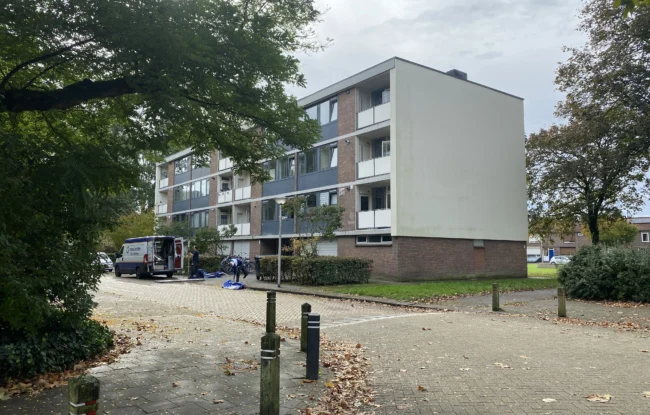
Lister Grauwaart, located in the neighborhood of De Leidsche Rijn in Utrecht, is a supported living facility where residents take the final steps before transitioning to their own homes. The location provides individual recovery support in various life areas, such as household management, health, administration, and social contacts. At Lister Grauwaart, residents are "spotted" together, meaning that residents with and without forensic backgrounds live in the same apartment block, interspersed among local residents. Lister Grauwaart is managed by the Dutch organization Lister and was opened in 2011. …
Living Israel NGO (Living Israel Kongregatsioon MTÜ) is a faith-based facility located in Tallinn, Estonia. Founded in 2014, the facility offers housing, addiction recovery, and reintegration support primarily for individuals leaving prison as well as for others struggling with addiction. Residents may enter the program at various stages: at the beginning or end of their sentence, or after release as part of their ongoing sobriety journey. Operating as a closed facility, Living Israel maintains a structured and disciplined environment designed to support recovery and prevent relapse. Through a formal agreement with the Estonian prison system, the facility provides ea…

Living Israel NGO (Living Israel Kongregatsioon MTÜ) is a faith-based facility located in Tallinn, Estonia. Founded in 2014, the facility offers housing, addiction recovery, and reintegration support primarily for individuals leaving prison (particularly those granted early release) as well as for others struggling with addiction. Residents may enter the program at various stages: at the beginning or end of their sentence, or after release as part of their ongoing sobriety journey. Operating as a closed facility, Living Israel maintains a structured and disciplined environment designed to support recovery and prevent relapse. Through a formal agreement with the Eston…

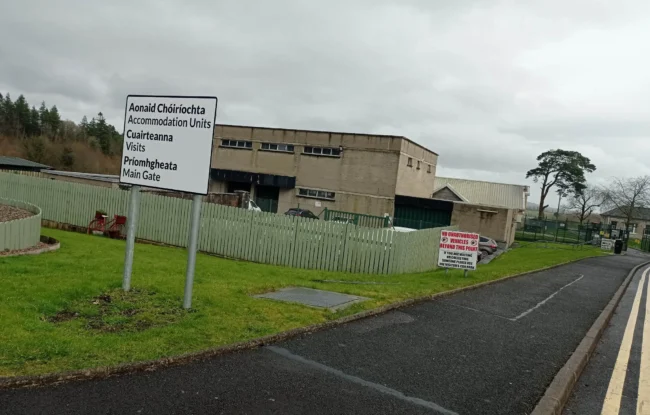
Loughan House Open Centre (from now on “Loughan House”) is a low-security, open prison situated in Blacklion, located in the western region of County Cavan, Ireland. Loughan House operates under the oversight of the Irish prison service and was established in the year 1972. It is characterized by its secluded location. …

Founded in 2006, Lyderhorn halfway house is a halfway house in the outskirts of Bergen, Norway. As part of a network of eight halfway houses across the country, this facility operates under the ownership of Kriminalomsorgen Norway, the Norwegian Correctional Services. Its mission is to help people in detention transition from a prison to free society by spending the last part of their sentence in a house with low security. The promotion of positive development and crime deterrence are a main focus in the house. …
Resize the map
77 Result(s)
Refine Search
Keyword
Type of facility
Location of the facility
Managed by
Target group (gender)
Target group (age)
Indicated principles
Social entreprise present?
Loading

Halbgefangenschaft Winterthur (HG Winterthur) is a semi-detention facility located in the city of Winterthur, in the canton of Zürich. Its mission is to enable residents to maintain their professional, educational, and social environments while serving their sentence. The facility functions according to the semi-detention concept, which allows residents to work, study, or train during the day while spending their nights and leisure time within the institution. …

Hostel Boschdijk is located in a residential area, Oud-Woensel, in Eindhoven. This housing facility is known for its unique target group, providing supported living for individuals experiencing long-term addiction and (formerly) homelessness. The hostel follows a policy of tolerance, aiming not to stop substance use, but to allow it to take place in a controlled manner. Residents are permitted to use substances in their own rooms and can receive methadone at a methadone clinic in the neighborhood. Additionally, clean needles and other supplies are provided for safe usage. Hostel Boschdijk offers accommodation to a group that has few alternative housing options, often…

House of Hope is a faith-based residential facility located in Kopli, a district of Tallinn, and is managed by the NGO The Salvation Army. Founded in 2010 by Salvation Army workers, House of Hope initially functioned as a renovated soup kitchen before developing into a secure residential program. Today, it offers an alternative to incarceration or a transitional environment for men experiencing addiction, homelessness, and social exclusion. The facility aims to provide men with the opportunity to enter a structured, abstinence-based program, often as a substitute for a traditional prison sentence. While many residents are referred through partnerships with the court …

House of Recovery Twente (in Dutch: Huis van Herstel) is an open detention facility in Almelo, the Netherlands. The facility was established in 2021 and is currently in a pilot phase that will last until 2026. It operates under the jurisdiction of the Custodial Institutions Agency of The Netherlands. Within the House of Recovery Twente, there is a strong emphasis on cross-domain cooperation with various network partners. The partners are the prison of Almelo, the three probation organizations and the fourteen municipalities of the Twente region. These partners extend beyond traditional law enforcement agencies and include organizations capable of providing care and o…

Huis en Haard 3, located in The Hague, is a protected residential facility that offers adults with psychiatric conditions a safe and supportive living environment. This facility is managed by the Salvation Army. The aim of Huis en Haard 3 is to help residents return to society as independently as possible. This is achieved by offering support in building daily structure and finding suitable daytime activities. With 24-hour support, a stable foundation is created for personal growth and recovery. Thanks to the combination of professional care and a recovery-oriented approach, Huis en Haard 3 not only provides a safe environment but also offers concrete opportunities f…

Intermezzo is a facility located in Eindhoven, the southeast of the Netherlands, and was founded in 2019. The facility is managed by the Doorpakkers Foundation. Doorpakkers is an organisation active in the southeast part of the Netherlands. They have several programs, that focus on forensic protected living, outpatient support and temporary housing assistance. The mission of Doorpakkers is "do what we say and say what we do!". Intermezzo is a form of forensic protected living. It is a residential facility that has fairly strict rules with someone present 24 hours a day. This is in contrast to their other apartments where there is less supervision.

The "Pietro Siciliani" Juvenile Prison (from now on “Bologna IPM”) is located in the centre of Bologna and forms part of the broader Juvenile Justice Centre (CGM) for the Emilia-Romagna region, in North-Italy. The CGM is responsible for implementing judicial orders issued by juvenile courts and collaborates with regional and local authorities on prevention and rehabilitation policies. In addition to the facility, the complex includes a Centre for First Reception (CPA), a Juvenile Social Services Office, and a state-run residential community for minors under precautionary measures, where support is delivered through individualised, interdisciplinary approaches. Situat…

The Institution Publique de Protection de la Jeunesse (IPPJ) de Saint-Servais is a residential facility for girls located near Namur in Wallonia, the French-speaking region of Belgium. It is the only IPPJ in the Wallonia–Brussels Federation exclusively for girls, meaning young women from across the region, including Brussels, may be placed here. Founded nearly a century ago, the facility will celebrate its centenary in 2026. Staff consider the geographical distance from residents’ home environments beneficial, especially for those from urban settings marked by prostitution, substance abuse, or violence. The IPPJ network forms part of Belgium’s public youth protection…

The Small-scale Judicial Youth Facility Amsterdam (from now on “KVJJ Amsterdam”) was established in 2016 and is located in Amsterdam, the capital city of The Netherlands. It is one of the five small-scale youth facilities in The Netherlands. KVJJ Amsterdam is managed by the Custodial Institutions Agency of The Netherlands in collaboration with a Dutch organisation named Levvel. KVJJ’s are based on three principles. First, they want to maintain the positive elements of the young person's life during their stay in the facility. For this reason, young people are placed close to their living environment in order to maintain contact with their family, friends and network. In addition, they want t…

The Small-Scale Judicial Youth Facility The Hague (hereafter referred to as "KVJJ The Hague") is one of the five small-scale judicial youth facilities in the Netherlands. These facilities are low-security and operate under the jurisdiction of the Custodial Institutions Agency of The Netherlands (DJI). KVJJ The Hague is managed by DJI in collaboration with the Salvation Army. It is a youth facility for boys between 12 and 23 years old. …

La Ferme de Moyembrie, located in Coucy-le-Château-Auffrique, about two hours from Paris, is an agro-ecological farm. In 1990, Jacques and Geneviève Pluvinage, retired agricultural engineers, bought a 24-acre plot of land to create a refuge for marginalized people. Jacques, who also visited local prisons, began receiving letters from prisoners who needed help after their release. The Pluvinages welcomed these people and shared their homes and work. In the early 2000s, a judge recognized their efforts, and in 2004, agreements with Reintegration Prison Services allowed them to officially host inmates and help them prepare for reintegration into society. La ferme de Moy…

Søndre Vestfold fengsel, Larvik avdeling (“Southern Vestfold prison, Larvik department", from now on “Larvik prison”) is a highsecurity prison for men. It was opened in 1862, and is located in the city of Larvik. Larvik prison is specialised on imprisoned youth between 18 and 25, and is the only Norwegian prison housing this target group only. …

Lilia Center is one of two Community Custody Units (CCU's), located in Glasgow, and was founded in 2022. CCU's are small-scale detention facilities tailored to support the needs of women in custody through a gender-specific and trauma-informed approach. Seamlessly integrated into local communities, these units provide safe accommodation to meet the needs of women seeking closer ties to their communities and access to essential services. The overarching goal is to promote independence to facilitate a smooth transition to society after incarceration. …

Lister Grauwaart, located in the neighborhood of De Leidsche Rijn in Utrecht, is a supported living facility where residents take the final steps before transitioning to their own homes. The location provides individual recovery support in various life areas, such as household management, health, administration, and social contacts. At Lister Grauwaart, residents are "spotted" together, meaning that residents with and without forensic backgrounds live in the same apartment block, interspersed among local residents. Lister Grauwaart is managed by the Dutch organization Lister and was opened in 2011. …

Living Israel NGO (Living Israel Kongregatsioon MTÜ) is a faith-based facility located in Tallinn, Estonia. Founded in 2014, the facility offers housing, addiction recovery, and reintegration support primarily for individuals leaving prison as well as for others struggling with addiction. Residents may enter the program at various stages: at the beginning or end of their sentence, or after release as part of their ongoing sobriety journey. Operating as a closed facility, Living Israel maintains a structured and disciplined environment designed to support recovery and prevent relapse. Through a formal agreement with the Estonian prison system, the facility provides ea…

Living Israel NGO (Living Israel Kongregatsioon MTÜ) is a faith-based facility located in Tallinn, Estonia. Founded in 2014, the facility offers housing, addiction recovery, and reintegration support primarily for individuals leaving prison (particularly those granted early release) as well as for others struggling with addiction. Residents may enter the program at various stages: at the beginning or end of their sentence, or after release as part of their ongoing sobriety journey. Operating as a closed facility, Living Israel maintains a structured and disciplined environment designed to support recovery and prevent relapse. Through a formal agreement with the Eston…

Loughan House Open Centre (from now on “Loughan House”) is a low-security, open prison situated in Blacklion, located in the western region of County Cavan, Ireland. Loughan House operates under the oversight of the Irish prison service and was established in the year 1972. It is characterized by its secluded location. …

Founded in 2006, Lyderhorn halfway house is a halfway house in the outskirts of Bergen, Norway. As part of a network of eight halfway houses across the country, this facility operates under the ownership of Kriminalomsorgen Norway, the Norwegian Correctional Services. Its mission is to help people in detention transition from a prison to free society by spending the last part of their sentence in a house with low security. The promotion of positive development and crime deterrence are a main focus in the house. …

Martien Schaaperhuis is a protected living facility in Amsterdam. This location is a development-oriented housing facility where residents initially receive intensive support and gradually learn to manage more aspects of their lives independently. The residents aim to eventually transition to their own housing. The focus is on providing assistance with meaningful daytime activities, financial management, and living arrangements. The idea to establish Martien Schaaperhuis for homeless people emerged during the Daverende Daklozendagen in 1997, a discussion forum involving homeless individuals, social workers, housing providers (including Martien Schaaper), and architec…

Neos Boutenslaan is a safe and supportive housing facility located in the Gestel district of Eindhoven, in the southern part of the Netherlands. This facility is designed for individuals who are temporarily or permanently unable to take control of their lives due to the complexity of their issues. The goal is to promote recovery and increase self-sufficiency through intensive guidance, care, and support. Neos Boutenslaan opened in 2020 and is managed by the Neos Foundation. At Neos Boutenslaan, various housing forms are available, including regular studios and a residential facility, each with its own house rules, …

DISCLAIMER

The content of this website is collected by RESCALED and intended to inspire the design and operation of detention houses. It is important to note that the practices shown here are considered inspirational because they materialize one or more principles of small-scale, differentiated and community-integrated detention houses. This also means that they do not all reflect a ‘perfect’ detention house. They have been compiled as examples to illustrate innovative and effective ideas that may be useful to consider when implementing a new detention house.

Small-scale, differentiated and community-integrated facilities can be found in many European countries. However, the applicability and implementation of these practices may vary significantly depending on the national legislation and other contextual factors unique to various countries in Europe. It is therefore essential to consult the relevant accompanying information and/or the respective authorities if you wish to learn more about a specific facility.

To fully understand and benefit from the knowledge of this database, we encourage you to read the dictionary. Here you will find explanations for the filters used to categorise various inspirational practices.

DISCLAIMER

Small-scale, differentiated and community-integrated facilities can be found in many European countries. There is not one, but a thousand detention houses. The content of this website is collected by RESCALED and intended to inspire the design and operation of detention houses. It is important to note that the practices shown here are not all an exact representation of existing detention houses. They have been compiled as examples to illustrate innovative and effective ideas that may be useful to consider when implementing a new detention house.

To fully understand and benefit from the knowledge of this database, we encourage you to read the dictionary. Here you will find explanations for the filters used to categorise various inspirational practices.

DISCLAIMER

Small-scale, differentiated and community-integrated facilities can be found in many European countries. There is not one, but a thousand detention houses. The content of this website is collected by RESCALED and intended to inspire the design and operation of detention houses. It is important to note that the practices shown here are not all an exact representation of existing detention houses. They have been compiled as examples to illustrate innovative and effective ideas that may be useful to consider when implementing a new detention house.

To fully understand and benefit from the knowledge of this database, we encourage you to read the dictionary. Here you will find explanations for the filters used to categorise various inspirational practices.